
Think about the last time you poured a beer straight from the bottle into your mouth. Sure, you got the job done—but did you really taste it? Here’s the thing: glassware isn’t just about looking fancy. It actually changes how you experience beer.
When you try various types of beer glasses, you’re accessing way more of the beer’s aroma—and since somewhere between 70 to 90 percent of what we taste comes from our sense of smell, you’re unlocking flavors you’d miss otherwise. The shape of your glass influences everything from how the carbonation bubbles hit your tongue to where those volatile aroma compounds end up.
Different beer types shine in different vessels. While a standard pint glass won’t hurt or enhance your beer much, specialty glasses can make hoppy IPAs explode with citrus notes or help a rich stout reveal its chocolatey depths. The presentation matters too—watching that golden pour, seeing the clarity and carbonation, admiring that perfect foam cap. Whether you’re drinking a session lager or a barrel-aged stout, the right glass elevates the experience.
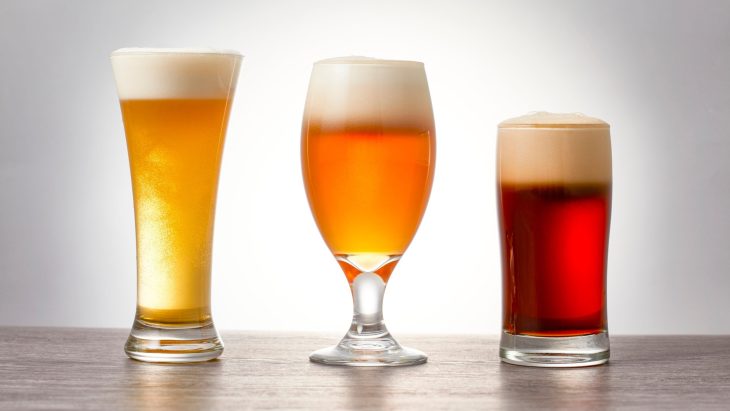
Pint Glass
Walk into any bar in America, and your beer’s probably coming in a pint glass. It’s the workhorse of beer drinking glasses—straightforward, unpretentious, and everywhere.
In the United States, a pint holds 16 fluid ounces, while the British imperial pint holds 20 ounces. These glasses didn’t become the go-to beer vessel until after Prohibition, when macro breweries dominated the scene. Light lagers didn’t need anything fancy, and the pint glass delivered—cheap, stackable, and durable.
The nonic pint features a bulge near the top. That bump keeps glasses from sticking when stacked, provides a better grip, and protects the rim if tipped over. Here’s the reality: the pint glass neither hurts nor enhances a beer’s aroma or taste. It’s functional for everyday drinking but doesn’t trap aromas or encourage head retention.
Best beers for pint glasses:
- American lagers
- Pale ales
- Amber ales
- Brown ales
- Irish stouts
- English bitters
- Blonde ales
- Cream ales
Related: When Was Beer Invented? A Journey Through Brewing History
Mug
The beer mug is built for durability and cold temperatures. These glasses have thick walls, a heavy base, and a sturdy handle—everything you need for serious drinking sessions.
The handle helps keep your beer cold by preventing heat transfer from your hand. That thick glass provides insulation, keeping your lager frosty through conversation. The weight and construction mean these can take a beating in busy bars without shattering.
Here’s the trade-off: mugs aren’t designed to enhance aroma or flavor. They’re workhorses, not specialists. The wide opening lets aromatics escape quickly, and you’re not getting any head retention help from the shape. But for cold lagers on hot days, or when you’re pouring big volumes, the mug delivers.
Best beers for mugs:
- German lagers
- Pale lagers
- American lagers
- Märzen/Oktoberfest
- Bocks
- Pilsners
- Session ales
Tulip Glass
The tulip glass brings elegance to beer drinking. With its bulbous body and flared lip, it’s designed to capture the head and promote the aroma and flavor of Belgian ales and other malty, hoppy beers.
The wide bowl and narrow top capture the beer’s head and open up its aroma, while the short stem facilitates swirling, further enhancing your sensory experience. That stem also keeps your warm hands away from the beer itself.
The shape helps maintain head retention while encouraging the release of the beer’s fragrant esters and phenols. The curved rim funnels everything—aroma, flavor, foam—right where you need it. For complex, aromatic beers, this glass is essential equipment.
Best beers for tulip glasses:
- Belgian strong ales
- Belgian dark ales
- Saisons
- Double/Imperial IPAs
- Barleywines
- Lambics
- Scotch ales
- American wild ales
Snifter
Borrowed from the spirits world, the snifter is preferred for beer styles with more complex aromas, aged beers, and those with an ABV of 8% or higher, such as Imperial Stout, Barleywine, and Double IPA.
The wide bottom and relatively narrow top trap aroma inside the glass, while the rounded bottom allows the glass to be cupped in the hand, thus warming the liquor. For high-alcohol beers, that gentle warming actually helps release deeper flavors and aromatics.
The rounded shape and narrow neck help maintain a persistent foam head. You can swirl to your heart’s content, releasing layers of aroma with each rotation. The small pour size—typically 6-8 ounces—makes sense for beers that pack a serious punch.
Best beers for snifters:
- Imperial stouts
- Russian imperial stouts
- Barleywines
- Belgian quadrupels
- Barrel-aged beers
- Double IPAs
- Strong ales
- Eisbocks
Weizen Glass
Wheat beer glasses, also known as weizen glasses, are tall and curvaceous. They’re the authentic way to serve German hefeweizens.
The glass is wider at the top than at the base, which aids in the production of head as well as increasing exposure to air. A narrower bottom also allows the beer to stay cooler for longer. The tall, narrow shape extends the distance that carbon dioxide bubbles must travel to reach the surface, keeping the beer fresh and sparkling for longer.
Pronounced effervescence, coupled with wheat’s high protein content, creates a thick, fluffy head that looks downright alluring. The length showcases the beer’s cloudy appearance and golden color. These generally hold 500ml worth of beer with room for head.
Best beers for weizen glasses:
- Hefeweizens
- Dunkelweizens
- Kristallweizens
- Weizenbocks
- American wheat ales
- Witbiers
Related: How to Pour a Beer: 6 Ways
Pilsner Glass
Tall, slim, and slightly wider at the mouth, a pilsner glass makes the sparkle, clarity, and bubbles of pilsners and other lighter beers visible. It’s pure visual appeal.
The shape of a pilsner glass is known to promote head retention and enhance beer volatiles. The features help to expose the bubbles, clarity, and sparkle of beers, with an overall V-shaped design. Typically, pilsner glasses hold less beer than a pint glass—usually somewhere in the vicinity of 12 to 14 ounces.
The tapered design concentrates carbonation into a tight stream of bubbles, showcasing one of pilsner’s defining characteristics. The wider mouth lets hop aromas escape gently. For crisp, clear lagers, this glass does the heavy lifting.
Best beers for pilsner glasses:
- Pilsners
- Czech pilsners
- American lagers
- Light lagers
- Blonde ales
- Bocks
- Helles
- Kölsch
Specialty & Novelty Glasses
Beyond the classics, beer culture loves its showpieces. A yard of ale or yard glass is a very tall glass used for drinking around 2.5 imperial pints of beer. Boot glasses—shaped exactly like you’d expect—have roots in German drinking traditions.
Tasting glasses, also known as testers, are small, versatile glasses designed for sampling a variety of beers in small amounts. Beer flight sets showcase your beer’s colors and flavors in matching glasses, served on wooden paddles. These typically hold 4-6 ounces each, perfect for exploring multiple styles.
Branded glasses from specific breweries add collectible value. Some folks swear by mason jar mugs for that down-home feel. The key with specialty glasses is knowing when function matters versus when you’re just having fun. For serious tasting, stick with proper glassware. For parties and novelty? Go wild.
Common specialty options:
- Tasting flights (4-6 oz samples)
- Boot glasses (das boot)
- Yard glasses
- Branded brewery glasses
- Mason jar mugs
- Oversized steins
Stout Glass
The stout glass was specifically engineered for dark beers. Spiegelau designed this distinctive glass in partnership with Left Hand Brewing Company from Colorado and Rogue Ales from Oregon, and it shows in every detail.
The shape of the base and the angle of the bowl accentuate the roasted malts and notes of rich coffee and chocolate that define stout beers. The angled shelf and narrow mouth promote head retention. The wide bulb allows generous pours while the tapered top keeps everything concentrated.
This isn’t your standard pint glass trying to do stout duty. The design pulls out the complexity in porters and stouts—those deep, roasted flavors that make these beers special. The narrow opening locks in that creamy head while directing rich aromatics straight to your nose.
Best beers for stout glasses:
- Stouts (all varieties)
- Porters
- Milk stouts
- Oatmeal stouts
- Coffee stouts
- Imperial porters
Willi Becher
The Willibecher or Willybecher is common in Germany. Its invention in 1954 is commonly attributed to an employee of Ruhrglas GmbH named Willy Steinmeier. It’s become the standard workhorse in German beer halls.
It is characterized by its shape: conical to the top portion, where it curves inward to converge back to the top of a smaller diameter opening. That slight inward curve traps aroma and helps with head retention, while the relatively narrow diameter showcases the brilliant clarity of a good lager.
This glass strikes the perfect balance—functional enough for high-volume service, but designed well enough to actually improve the drinking experience. It’s versatile, durable, and does exactly what German lagers need without any fuss.
Best beers for Willi Becher:
- German lagers
- Helles
- Dortmunder Export
- Munich lagers
- Pilsners
- Märzen
- Light ales
The Right Glass Makes All the Difference
The right glass genuinely transforms how you experience beer. We’ve covered the essentials: pint glasses for everyday drinking, mugs for keeping things cold, tulip glasses for aromatic Belgian ales, and snifters for bold imperial stouts. Weizen glasses showcase German wheat beers, pilsner glasses highlight clarity and carbonation, and tasting flights let you explore multiple styles. Each glass affects aroma, temperature, head retention, and how flavors hit your palate. You don’t need every type to enjoy great beer, but understanding the basics helps you make smarter choices for your home bar. Start with versatile options that match the beers you drink most, then expand from there. Now you’ve got the knowledge to serve it right and taste it better.
FAQs – Types of Beer Glasses
There are several main types of beer glasses, each designed for specific styles. Pint glasses work for everyday drinking, while tulip glasses enhance aromatic Belgian ales. Snifters concentrate flavors in strong beers like imperial stouts. Weizen glasses showcase German wheat beers, and pilsner glasses highlight clarity and carbonation in lighter beers. Mugs keep beer cold with their thick walls and handles. Specialty options include tasting flights, boot glasses, and branded brewery glasses.
Big German beer glasses are called steins or masskrugs. Traditional steins are made from stoneware or glass and often feature hinged lids and decorative designs. A masskrug specifically holds one liter of beer and is the standard glass used at Oktoberfest celebrations. Beer mugs with handles are also popular in German beer culture, featuring thick glass walls and sturdy construction for durability in busy beer halls and pubs.