
Solera brewing is a centuries-old technique that keeps your vessel running indefinitely, building layers of complexity with every cycle. The idea is simple: pull a portion of aged beer, top the vessel back up with fresh beer, and let time do the rest. Every cycle adds depth, character, and history to what’s sitting in that barrel.
Understanding the process, the equipment, and the timing is what separates a good solera from a great one. Here you’ll find everything covered: how solera works, which styles suit it best, how it stacks up against other aging methods, and how to start one at home.
Introduction to the Method
The Solera system is a way of aging beer that never fully resets. Instead of emptying a barrel after each batch, you pull out a portion of the aged beer, package it, and top the vessel back up with fresh beer. That fresh beer then picks up the character of the older liquid still in the barrel — and the cycle keeps going.
The result is a beer that’s always a blend of different ages at once. This builds flavor over time in a way that a standard single-batch brew simply can’t match.
What makes the Solera system so useful is consistency. Because older beer is always present in the vessel, it smooths out the variations that come with each new addition. You get a recognizable flavor that evolves slowly and steadily rather than jumping around from batch to batch.
History of the Solera Method
The solera method started in Andalusia, Spain, around the 1760s. Sherry producers developed it as a way to keep their product tasting consistent year after year, rather than releasing wines that varied with each harvest. The word “solera” comes from the Spanish for “on the ground” — a reference to the bottom tier of barrels in the traditional stacked setup, where the oldest liquid was kept.
Over time, the technique spread to ports in Portugal, Marsala in Sicily, and other fortified wines across Europe. Brewers eventually caught on, too. Early beer adopters included Gale’s in the UK, Ballantine’s in the US, and Bayerska in Sweden. Belgian brewers used it for Flemish red ales and oud bruin-style beers.
In the US, the craft beer version of solera really got going in 2003 at Cambridge Brewing Company in Massachusetts. Head Brewer Will Meyers launched what’s widely recognized as the first traditional commercial solera program for sour beer in the country — and it’s been inspiring American homebrewers and craft brewers ever since.
Related: Barrel Aging Beer at Home: Your 9-Step Complete Guide
How the Solera Process Works
The solera process is built around a simple repeating cycle. Here’s how it goes:
- Fill the vessel. Load your barrel or fermenter with your base beer. This is your starting point.
- Let it age. Leave the beer to mature for six months to a year, depending on the style you’re making.
- Pull a portion (the saca). Draw off roughly one-third of the vessel. This is the beer you’ll package and drink.
- Top it back up (the rocío). Refill the vessel with freshly brewed beer of the same style.
- Let the blend develop. The fresh beer mixes with the older liquid still in the vessel and gradually takes on its character.
- Keep things even. In a multi-barrel setup, replenish each barrel with equal proportions from the next tier. Uneven topping leads to inconsistency across barrels.
- Repeat indefinitely. The vessel is never fully emptied, so traces of the original batch can carry through for many years.
In a traditional multi-tier system, barrels are organized by age — oldest at the bottom, youngest at the top — and each tier feeds into the next during every cycle.
Equipment Used in Solera Brewing
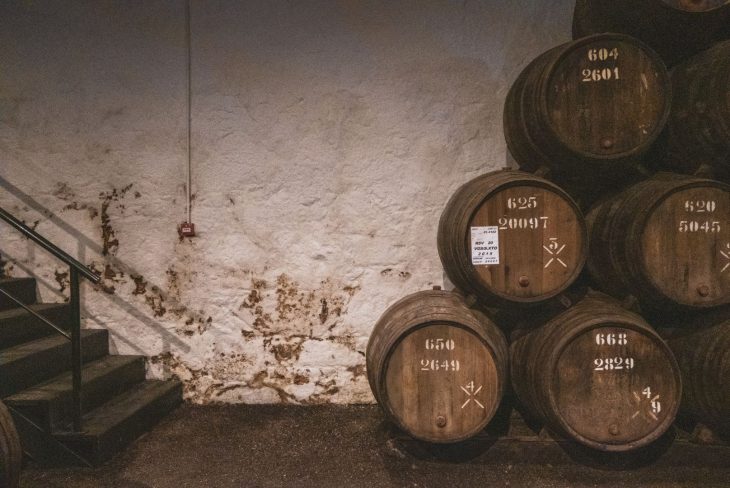
Oak barrels are the go-to vessel for solera brewing. Used wine or spirit barrels — bourbon, sherry, brandy, and Bordeaux wine barrels are all popular — are preferred over fresh ones because they add subtler wood character. They also allow a small amount of oxygen to pass through the wood over time, which slowly develops the beer’s flavor. Depending on what was previously in the barrel, you can pick up notes of vanilla, caramel, or dried fruit.
If you don’t have access to barrels, stainless steel tanks, or food-grade plastic fermenters work fine as alternatives. You won’t get any wood character, but the blending process still works the same way.
A few other things you’ll need:
- Racking equipment to transfer beer between vessels without introducing too much oxygen
- Temperature control — warmer conditions speed up flavor development, cooler conditions slow things down and keep things cleaner
- Good record-keeping to track fill dates, volumes, gravity, and acidity over time
- Airtight seals or airlocks to protect the beer between cycles
Keeping your blending consistent across all vessels matters a lot — uneven replenishment is one of the main causes of batch-to-batch inconsistency in a solera program.
Advantages of the Solera Method
The solera method has some real benefits that make it worth the extra effort:
- More complex flavor. Every release is a blend of multiple ages, so the beer builds up layers — malt depth, acidity, barrel character — that a single batch just can’t develop on the same timeline.
- Better consistency. The older beer already in the vessel naturally balances out any sharp edges from a fresh addition, making each release more predictable.
- Regular releases. Because the vessel is never emptied, you can pull beer on a set schedule without waiting for a whole new batch to mature from scratch.
- A unique house character. Over time, a solera develops its own identity based on the specific microflora, barrel history, and blending history involved. No two soleras are alike.
- Efficient use of your barrels. Vessels stay in active use year-round instead of sitting empty between batches.
The downsides are worth knowing too. It’s labor-intensive, it ties up your equipment for a long time, and you need to be careful with your blending technique to avoid inconsistencies between barrels. But for brewers who want to produce genuinely complex beer, the tradeoffs are worth it.
Beers Commonly Brewed with Solera
The solera method works best with beer styles that actually benefit from long aging and repeated blending cycles.
Sour beers are the most common choice in American craft brewing. Wild ales, Flemish red ales, oud bruin-style beers, and gueuze-inspired blends all do well here. Microorganisms like Brettanomyces, Lactobacillus, and Pediococcus build up and evolve across cycles, adding layers of tartness and funk that take time to fully develop.
Belgian ales — especially saisons and farmhouse ales — are another good fit. Their yeast-forward character deepens with age and responds well to blending with younger batches.
Imperial stouts and barleywines also work well. Their high alcohol and rich malt base can handle long aging, producing beers with dark fruit, roasted notes, and strong barrel influence.
Third Space Brewing in Milwaukee is a good real-world example — they run a multi-barrel solera cycling through bourbon, brandy, and sherry barrels for their anniversary series, with each yearly release including portions of every previous blend.
One style that doesn’t work well here: hop-forward beers like IPAs. Hop character fades quickly and doesn’t hold up through extended aging cycles.
Related: All-in-One Brewing Systems: The Ultimate Guide for Home Brewers
Solera vs. Other Aging Methods
Single-batch barrel aging is the most common alternative. You brew a beer, fill a barrel, let it sit, and eventually pull and package the whole thing. It’s straightforward and gives you full control over each release — but once the barrel’s empty, that’s it. There’s no carry-over into the next batch.
With solera, the vessel is never fully emptied, so older beer is always present in every release. That’s what creates the multi-year depth that single-batch programs simply can’t replicate.
Batch aging — blending several barrels of similar age — gives you more control over a single release, but still doesn’t give you that layer-on-layer depth that builds over time with solera.
Mixed fermentation programs produce complex, wild-character beers but work within a single batch timeline rather than stacking years of history.
Quick comparison:
- Single-batch aging — full control per release, no carry-over character
- Batch blending — consistent within a release, no multi-year depth
- Mixed fermentation — wild and complex, but single-timeline only
- Solera — continuous blending, multi-year depth, consistent character across releases
Tips for Home Brewers
You don’t need a commercial setup to run a solera. Here’s what to keep in mind if you’re starting one at home:
- Start small. A five- or ten-gallon used wine or spirit barrel is a practical starting point. A glass or stainless fermenter works too if you can’t get a barrel.
- Pick a forgiving style. Farmhouse ales, simple sour ales, and Belgian-inspired beers are good first choices — they age well and handle the blending process naturally.
- Don’t pull too much at once. Stick to removing around one-third of the vessel per cycle. Pulling more than that throws off the aging balance.
- Top it up soon after pulling. Refill the vessel promptly after each draw to keep oxygen exposure low and the microbial environment stable.
- Write everything down. Keep a log of every pull — date, volume, gravity, acidity, and how it tasted. You’ll need this data to fine-tune your timing as the solera matures.
- Connect with other brewers. Homebrew clubs affiliated with the American Homebrewers Association are a great resource. You’ll find members who’ve been running soleras for years and can offer practical, hands-on advice.
- Be patient with the early batches. The first couple of pulls from a new solera are rarely the best. Things improve noticeably after the third or fourth cycle.
Your Solera Starts Now
Solera brewing is a centuries-old technique that any homebrewer can pull off — and now you’ve got everything you need to try it. The concept is straightforward: never fully empty your vessel, keep blending old beer with new, and let time build the complexity for you.
Sour ales, farmhouse styles, stouts, barleywines — there’s a solera approach that fits whatever you like to brew. Start small with a five-gallon barrel, pick a forgiving style, and keep notes on every pull. The early batches won’t blow your mind — but give it a few cycles, and you’ll have something genuinely unique sitting in that barrel.
FAQs
The Solera method is a continuous aging and blending process where a portion of beer is regularly drawn from a vessel and replaced with fresh beer. The older liquid remaining in the vessel imparts its character to the new addition, building complexity over multiple cycles. The vessel is never fully emptied, so every release carries years of accumulated flavor.
A solera is a vessel — or system of vessels — used for fractional blending and continuous maturation of liquids like beer, sherry, and wine. Rather than producing a single batch and starting over, a solera keeps running indefinitely. Each time beer is pulled and replaced, the blend takes on more depth and character, creating a flavor profile that evolves gradually over time.