
Mash pH is one of the easiest ways to take your homebrew from good to great. It shapes how well your grain converts, how efficiently your mash runs, and how clean and crisp your beer tastes. The trick is measuring it well, and that’s where pH strips vs pH meter brewing comes into play. Strips are cheap and quick, while meters bring precision and repeatability.
Here’s a straight-talking breakdown of accuracy, cost, upkeep, temperature tips, and which tool fits your brewing style best, so you can pick the right one, dial in your mash, and brew your best beer yet.
pH Strips vs pH Meter Brewing: What’s the Difference?
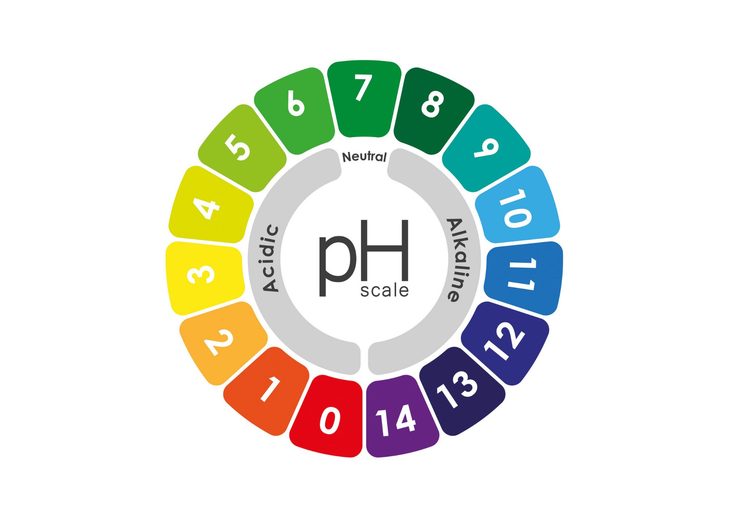
pH strips and pH meters measure the same thing: how acidic your wort or mash is on the 0–14 pH scale. They just get there in different ways.
A pH strip is a piece of treated paper or plastic coated with dyes that change color with acidity. You dip it, wait, and compare the result against a color chart. A pH meter uses a probe with a glass electrode that senses hydrogen ions and shows the result as a number on a screen.
In homebrewing, pH affects starch conversion, efficiency, and flavor, so knowing where you stand matters. The short answer to pH strips vs pH meter brewing is this: strips are cheaper and simpler, while meters deliver greater precision and repeatability.
You can test brewing water or wort pH before the boil, but most brewing pH testing happens in the mash. That’s why mash pH is the main benchmark for comparing pH strips vs meter for brewing throughout this article.
Why pH Matters When Brewing Beer
The mash relies on two key enzymes, alpha-amylase and beta-amylase, to break grain starch into sugars yeast can ferment. Both are sensitive to pH. Beta-amylase works best in slightly more acidic conditions, while alpha-amylase tolerates a bit higher pH, so brewers aim for a range where both stay active. Most targets fall around 5.2 to 5.6, measured at room temperature.
When mash pH sits in that range, starch conversion runs efficiently. When it drifts, enzyme activity slows, which can shift the balance of fermentable sugars and change how dry or full-bodied the beer finishes. A mash pH that runs too high can also pull harsh, astringent tannins from grain husks.
Mash chemistry affects your numbers, too. An out-of-range mash can cost you gravity points even when your crush, temperatures, and recipe are all correct. And the effects carry into the glass, influencing hop bitterness, color, clarity, and how well the beer holds up over time. That’s the importance of mash pH: it touches almost every stage, from your brewing water to the finished pint.
Key points:
- Mash pH controls enzyme activity and starch conversion
- The typical target is 5.2–5.6 at room temperature
- High pH risks tannin extraction and harsh flavors
- Poor pH can lower mash efficiency
- Beer mash pH shapes bitterness, color, clarity, and stability
Related: The Highest Alpha Acid Hops: Strongest Bittering Hops Explained
Using pH Strips for Brewing
Using pH test strips is simple: pull a small wort sample from the mash, dip the strip, let the color develop, and match it to the color chart. There’s no calibration, setup, or cleanup.
Range matters. Wide-range 1–14 strips aren’t precise enough for brewing. Look for narrow-range strips built for the mash zone. ColorpHast plastic strips are the long-standing choice for brewing pH strips, but brewing testers have found that the ColorpHast strips have a -0.3 systematic error when they are used for testing the mash pH. Many brewers add 0.3 to the reading to compensate.
Reading conditions matter too. Color matching is subjective, and indoor lighting can throw the colors off quite a bit, so read strips in natural light when possible. Dark wort from stouts and porters can stain the strip and make colors hard to judge. Let the sample settle and blot off excess liquid before reading.
Pros:
- Inexpensive and easy to find
- No calibration or maintenance
- Disposable, nothing to store carefully
- Fast: roughly 1-2 minutes to take a reading with ColorpHast strips
- Useful backup if a meter fails
Cons:
- Color interpretation is subjective
- Lower precision than a meter
- Known low bias on mash readings
- Hard to read with dark wort
- Ongoing cost per test
Using a pH Meter for Brewing
A digital pH meter measures acidity through a probe fitted with a glass electrode. The electrode reacts to hydrogen ions in the sample and produces a small voltage, which the meter converts into a pH reading. You place the probe in a cooled sample, wait a few seconds for the reading to stabilize, and get a number such as 5.38.
Calibration is essential. A meter is only as accurate as its last calibration. Use calibration solution buffers, usually pH 4.01 and 7.00, at room temperature, and calibrate at the start of every brew day.
The electrode needs care. Store the tip in storage solution, never distilled water. Rinse it between samples and don’t let it dry out. A neglected probe gives slow, drifting readings.
The biggest advantage of a brewing pH meter is repeatability. The same sample should give the same reading every time, which lets you track batches and fine-tune acid and salt additions. Many meters include temperature compensation, though it doesn’t replace cooling your sample, as covered below.
Pros:
- Precise numerical readings
- Consistent, repeatable results
- No color interpretation
- Works with dark wort and sour beers
- Ideal for adjusting mash chemistry
Cons:
- Higher upfront cost
- Requires regular calibration
- Probe needs careful storage
- Electrodes wear out and need replacing
- Slower to use than strips
pH Strips vs pH Meter: Accuracy
On the pH scale, strips give you a range, while meters give you a reading. With strips, you’re estimating between color blocks. With a calibrated meter, you’re reading to a hundredth of a unit. For pH accuracy and pH precision, the meter wins clearly.
That precision matters because the target mash window is narrow, roughly 5.2 to 5.6 at room temperature depending on the style. That’s less than half a pH unit. A measurement error of 0.3 can put you outside the target entirely.
So, are pH strips accurate for brewing? Partly. Bru’n Water’s guidance notes that pH strips typically used by homebrewers are reported to misreport mash pH by about 0.2 to 0.3 units lower than actual. Not everyone trusts that offset to stay constant. Experts say strips nearly always indicate that the mash pH is 0.3 or more lower than it actually is, and argue the bias isn’t reliable enough to correct for. If the offset varies from batch to batch, the correction becomes guesswork.
A meter isn’t automatically better, though. A cheap meter with a poor electrode and no calibration buffer routine can be less reliable than good strips. Accurate mash pH measurement depends on a decent meter plus regular calibration and maintenance.
Final verdict: A calibrated meter is the most accurate option for mash pH. Quality strips can get you in the ballpark if you account for their low bias, but an uncalibrated meter shouldn’t be trusted over either.
Temperature and Brewing pH Measurements
The standard practice is to pull a small mash sample, cool it to room temperature, and then measure. A shot glass set in an ice bath cools a sample in a few minutes. Brewers do this because standard target ranges are written for room-temperature readings, and Bru’n Water’s advice is to always aim for a room temperature pH as your standard.
The difference isn’t just a measurement quirk. The chemistry actually changes with heat. According to Bru’n Water, the mash pH reading is about 0.2 to 0.3 units lower at 150°F than at room temperature. If you measure hot and compare the result to a room-temperature target, you may add acid or alkali to fix a problem that doesn’t exist.
Heat is also hard on the pH electrode. Placing a probe directly in a 150°F mash shortens its lifespan, and the probe is usually the most expensive part to replace.
Many meters advertise automatic temperature compensation, but it doesn’t remove the need to cool samples. Bru’n Water explains that ATC pH meters only compensate for the response of the pH meter’s electrode at varying temperatures. ATC corrects the electrode’s response, not the real pH shift in the mash.
Final verdict: Always measure mash pH at room temperature, whether you use strips or a meter. Cooling the sample gives readings that match published targets and protects your probe. An ATC pH meter doesn’t change that rule.
Which Is Better for Homebrewers?
The Beginner Brewer
If you brew extract kits or partial mash, strips are enough. You aren’t making major mash pH adjustments yet, and narrow-range strips show where your mash lands without adding another tool to calibrate and maintain.
The Occasional Brewer
If you brew a few times a year, strips usually make more sense. A meter needs calibration before each use, and its probe must be stored properly between sessions, or it will degrade. The exception is if your local water is high in alkalinity or otherwise unusual. In that case, a meter can help you correct problems reliably.
The Frequent All-Grain Brewer
For regular all-grain brewing, a meter is the better choice. Accurate readings let you adjust water chemistry, compare batches, and maintain tighter mash control. For this brewer, the best pH tester for homebrew is a mid-range meter with a replaceable probe.
The Recipe-Development Brewer
If you build recipes from scratch or change grain bills and water profiles, a meter is necessary. Recipe consistency depends on knowing exactly how each change affects mash pH, and strips aren’t precise enough to detect small shifts.
The Sour Beer Brewer
Sour beers reach a much lower pH than a typical mash, often below 3.5. Most brewing strips don’t cover that range, and cloudy, acidic wort is hard to read by color. A meter is the clear choice for monitoring kettle sours and souring progress.
The answer to pH strips or meter for homebrew depends on how actively you manage your mash. The more adjustments you make, the more useful a meter becomes.
Cost, Maintenance, and Convenience
Strips cost less upfront. A pack of quality narrow-range strips is much cheaper than any reliable meter. In terms of pH meter cost, a solid brewing-grade model typically runs from about $50 to $150 or more. Cheaper meters exist, but they often lack stable electrodes or easy calibration.
Strips are consumables, though. Each test uses one, and testing a few times per batch adds up. Over a couple of years of regular brewing, total pH strips cost can approach the price of a basic meter.
Meters have running costs too. You’ll need calibration solution buffers, typically pH 4.01 and 7.00, plus probe storage solution. These are affordable but expire and can become contaminated, so replace them regularly. The electrode also wears out, usually within one to two years. Some meters accept replacement probes, while cheaper models often need replacing entirely.
Good pH meter maintenance brewing habits include storing the probe wet in storage solution, never in distilled water, and keeping it where it won’t be knocked or frozen. Strips only need to stay sealed and dry.
For ease of use, strips are faster. Meters need a few minutes of prep each brew day, but the routine becomes quick with practice.
At a glance:
- Upfront cost: strips are cheaper
- Long-term cost: similar with frequent brewing
- Maintenance: strips need none; meters need calibration and probe care
- Lifespan: probes last about 1–2 years
- Speed: strips are quicker; meters are more precise
Related: Is Beer Acidic or Alkaline? Answered!
Final Verdict: pH Strips or pH Meter?
If you’re new to brewing or just want a rough check, a quality pH strip is enough to tell you whether your mash is far off target. If you want consistent, accurate results batch after batch, a calibrated pH meter is the better tool. For brewing accuracy, the meter wins.
Even meter owners should keep a pack of strips on hand. Probes can fail mid-brew, and strips provide a quick backup or a sanity check on an unexpected reading.
So, should I buy a pH meter for brewing? Yes, once you start actively adjusting mash pH with acids or brewing salts. At that point, you need reliable numbers to make precise corrections and keep your mash control repeatable.
Strips or Meter? Now You Know
Mash pH has a hand in almost everything on brew day, from how well your grain converts to how your beer tastes, looks, and holds up over time. pH strips are cheap, quick, and easy, so they’re a great fit if you’re just starting out or only need a rough idea of where you stand. Just keep in mind they tend to read a little low. A pH meter costs more and needs some upkeep, but it pays you back with precise, repeatable numbers that make dialing in your mash way easier.
Whichever you pick, take your readings at room temperature so they line up with standard targets. Once you start tweaking your mash chemistry, grab a meter, keep some strips as backup, and brew with confidence.
FAQs
A pH probe is the sensor, usually a glass electrode, that goes into your sample and produces a small voltage based on its acidity. The pH meter is the unit that reads that signal and turns it into a number on a display. Many pocket-style brewing meters combine both in one tool, while others let you swap out a worn probe.