
All-in-one brewing systems are electric brewing devices that pack everything you need—mashing, boiling, and sometimes chilling—into a single compact unit. These systems have completely changed home brewing by fitting what used to require a garage full of equipment onto your kitchen counter or into a corner of your apartment.
They’ve exploded in popularity for good reasons. Most plug into standard household outlets, heat up in under an hour, and use digital controls to walk you through each step. The consistency they deliver is impressive—once you nail that perfect IPA recipe, you can recreate it batch after batch without guessing whether your temperatures drifted.
These compact brewers work for everyone. Beginners love them because they eliminate guesswork and heavy lifting. Experienced brewers use them for winter brewing when it’s too cold for propane outside. You’ll find them in tiny apartments, suburban garages, and even small craft breweries for recipe development. They’ve removed the barrier between wanting to try brewing and actually making beer—no three-vessel system needed, no basement conversion required. Just one machine, ingredients, and a willingness to start.
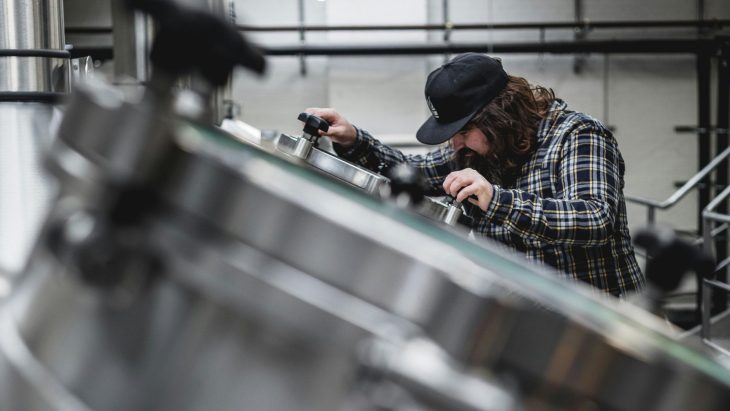
How All-in-One Brewing Systems Work
The process starts by filling your system with water—typically 6 to 10 gallons, depending on batch size. The built-in heating element brings water to strike temperature, usually around 152-156°F. Digital controls let you set the temperature precisely, then maintain it automatically while you handle other prep work.
Once you hit the temperature, drop in the grain basket—a perforated stainless steel insert that holds crushed malt during the mash. The heating element maintains a precise temperature while enzymes convert starches into fermentable sugars. Most systems include a recirculation pump that continuously moves wort from the bottom back over the grain bed. This clarifies your wort and improves efficiency by keeping everything evenly heated.
After 60 minutes, lift out the grain basket, and you’ve got sweet wort ready for boiling. Crank the power to full blast, and the heating element brings the wort to a rolling boil. Add hops according to your recipe schedule. Many systems have built-in timers with alarms that remind you when to add each hop.
The temperature controller is the brain of the operation—it reads sensors in the kettle and adjusts power to the heating element automatically. Basic models give simple up-and-down controls; advanced ones let you program entire multi-step mash schedules that execute automatically.
The magnetic drive pump handles recirculation during mashing and transfers finished wort to your fermenter. The recirculation arm distributes wort evenly over the grain bed, producing the crystal-clear wort commercial breweries achieve. The grain basket features hundreds of precision perforations that let liquid flow through while keeping grain particles out. Better systems include a false bottom with a center overflow tube, preventing scorching and maintaining efficient wort movement.
Advanced models connect to smartphone apps for remote monitoring. You can check mash temperature from anywhere or get notifications when it’s time to add hops—insurance against forgetting steps that could ruin batches.
Related: Home Brewing in an Apartment: A Complete Beginner’s Guide
Types of All-in-One Brewing Systems
Countertop vs. Floor-Standing Models
Countertop systems typically max out around 10 gallons total capacity, making 5-gallon batches comfortably. They’re ideal for apartment dwellers—plug into standard 120V outlets, brew a batch, then store away when done. Systems like the Grainfather, Anvil Foundry, and Brewzilla fall here. They weigh 20-40 pounds empty, making them easy to move around.
Floor-standing systems handle 15 gallons and up, some reaching the 20-30 gallon range. These often need 240V power (same as your dryer), heat faster, and handle bigger batches. The tradeoff is committing permanent space in your garage or brewery area. They’re perfect for serious production or throwing parties requiring multiple kegs.
Beginner-Friendly vs. Advanced Models
Entry-level systems like the Brewer’s Edge Mash and Boil or DigiMash keep things simple. Basic temperature control, heating element, grain basket, and straightforward controls. They run $300-400, don’t require fancy wiring, and deliver reliable results. You’re handling manual temperature adjustments and tracking your own timing.
Advanced models like the Grainfather Connect or Spike+ Solo bring programmable step mashing, integrated pumps, smartphone connectivity, recipe libraries, and built-in hop addition timers. The Braumeister offers WiFi control and memory banks for storing favorite recipes. You’ll pay $800-1,500 or more, but you’re getting precision rivaling commercial systems.
Electric Brewing Variations
Most modern all-in-ones run pure electric—no propane, no fire, no carbon monoxide concerns. This means year-round indoor brewing, regardless of the weather. Systems running on 120V (standard household current) max out around 1,800 watts, meaning slightly longer heating times but ultimate convenience.
The 240V systems pack up to 5,500 watts—way faster heating. Water taking 45 minutes to reach strike temp on 120V might only take 20-25 minutes on 240V. Some systems, like the Anvil Foundry, offer switchable power, letting you use whichever outlet is available.
Grain-to-Glass and Specialty Systems
True all-in-ones like the BREWHA BIAC (Brew-In-A-Conical) let you mash, boil, chill, and ferment all in the same vessel. Genuine grain-to-glass, where beer never leaves the fermenter until hitting your glass. The sanitation benefits are significant—fewer transfers mean less oxygen exposure and lower contamination risk.
Mini-brewers like the old PicoBrew or iGulu took a different approach—super compact, often with proprietary ingredient packs, designed for absolute beginners wanting to brew without getting into all-grain processes. They’re more appliance than a brewing system, which works perfectly for some folks.
Benefits of Using All-in-One Brewing Systems
All-in-one brewing systems deliver serious advantages that make home brewing more accessible and enjoyable. Traditional three-vessel brewing means managing a hot liquor tank, mash tun, and boil kettle—three separate pieces needing heating, monitoring, and eventual cleaning. With an all-in-one, you heat water, mash, and boil in the same vessel, dramatically simplifying the process.
- Convenience: set your mash temperature, walk away, and return in an hour. The system holds temperature automatically while you prep hops or organize supplies. Indoor brewing, regardless of weather, is liberating—rain, snow, wind doesn’t matter. You’re climate-controlled and comfortable year-round.
- Consistency: the heating element delivers the same power every time. Temperature controllers maintain exact mash temps. Your efficiency stays predictable batch after batch. When dialing in recipes, you change one variable at a time, knowing your brewing process isn’t creating random variations.
- Space-Saving: a typical 10-gallon system occupies about the same footprint as a large stockpot—maybe 16 inches in diameter, 20 inches tall. Store in closets, tuck under shelves, slide into cabinets when done. Your kitchen doesn’t become a permanent brewery.
- Cost Efficiency: compared to piecing together traditional systems—multiple kettles, burners, pumps, temperature controllers, fittings, and hoses—all-in-ones offer integrated convenience at competitive prices. Repeatability means fewer wasted batches, saving ingredients. Brewing at home still crushes craft beer store prices.
Common Challenges and Limitations
Price represents the biggest barrier. Entry-level models start around $300, but premium options with programmable controllers, integrated pumps, and smartphone connectivity climb into the $800-1,500 range. Top-tier systems approach $2,000+. For someone testing brewing waters, that’s serious commitment.
Even straightforward systems have learning curves. Your first brew day involves figuring out fill lines, grain basket timing, and pump valve settings. Instruction manuals help but aren’t always beginner-friendly. If you bought a 240V model for faster heating, you’ll likely need an electrician to install the proper outlet—another $100-200.
These systems need cleaning—proper cleaning, not quick rinses. Beer leaves proteins, sugars, and hop residue that crusts onto heating elements and clogs pump screens. Post-brew cleaning means disassembling grain baskets, scrubbing interiors, flushing pumps, and ensuring no gunk hides in crevices. Heating elements develop beer stone, requiring periodic descaling. Pumps need deep cleaning, especially with hoppy beers. Factor 30-45 minutes of cleaning after each brew.
Most consumer all-in-ones top out around 5-gallon finished batches. For casual brewers making personal consumption beer, this works perfectly. For someone burning through kegs quickly or wanting multiple styles on tap, it feels restrictive. Standard 10-gallon systems handle maybe 18-20 pounds of grain comfortably—massive imperial stouts requiring 30 pounds of malt won’t fit.
Heating time reality: 120V systems take 40-50 minutes, bringing 7 gallons from tap temp to strike temp. The 240V systems are faster (20-30 minutes), but need that special outlet. All-in-one brew days aren’t necessarily faster than traditional brewing—they’re just less hands-on.
Key Features to Look For
Choosing the right system means understanding which features actually matter for your brewing style. Not all capabilities justify their price tags, but certain ones dramatically improve your experience.
Automation and Programmability: Entry-level systems offer manual temperature control—set the temp, the element heats to it. Mid-tier systems add programmable step mashing, where you punch in your schedule, and the system executes automatically. Top-end models include recipe memor,y storing favorite beers for one-button recall.
Temperature Control: Accurate sensors are non-negotiable. Mash temp being off by 5 degrees completely changes the beer’s body and alcohol content. Look for calibrated sensors you can verify with your own thermometer. PID controllers provide rock-solid temperature holds instead of swinging temperatures from basic on/off controllers.
Pumps and Circulation: Magnetic drive pumps are quieter and more reliable than mechanical pumps. The flow rate should circulate your full volume effectively without creating whirlpools or dragging grain through baskets. Adjustable flow control helps dial this in for different grain bills. Some systems include pumps standard; others charge $100+ extra.
Ease of Cleaning: Systems with smooth interiors and minimal crevices clean faster. Removable elements let you actually see what you’re cleaning. Grain baskets should disassemble easily with no weird nooks trapping grain. Tri-clamp fittings make disassembly trivially easy.
Digital Controls: Good control panels should be intuitive, even when tired. Large, backlit displays beat tiny LED screens. Physical buttons generally age better than touchscreens in brewery environments. Alarm functionality for hop additions and mash completion keeps you from forgetting steps.
Related: How Much Does It Cost to Start a Brewery?
Top Brands and Models
Market Leaders and Their Strengths
Grainfather pioneered the modern all-in-one market and still sets the premium standard. The G30 Connect runs $1,000-1,200, delivering smartphone app control, step-mash programming, integrated pump, counterflow chiller, and build quality lasting decades. The G70 scales to 18-gallon batches for serious brewers. Grainfather systems consistently win awards and appear in commercial breweries for recipe development. The downside is price and paying for features you might not need for simple ales.
Anvil Foundry carved the value segment without sacrificing quality. The 10.5-gallon model costs under $500 with a pump and offers dual-voltage capability—switch between 120V and 240V depending on available power. The high-flow grain basket with 150% more perforations than competitors dramatically reduces stuck sparges. Double-wall insulation maintains temperatures. Users praise reliability and straightforward controls. Downsides include slightly slower 120V heating and fewer automation features than pricier competitors.
Brewzilla/Robobrew represents the budget-conscious choice at $400-500. Australian-designed, they’ve improved grain baskets, added features, and addressed early quality concerns through multiple revisions. Gen 4 models include Bluetooth connectivity and programmable mashing. Build quality doesn’t quite match Grainfather or Spike, but they’re solid performers for testing all-in-one brewing without a huge investment. Common complaints center on temperature accuracy and occasional quality control issues.
Spike Brewing approaches all-in-ones from the high-end enthusiast angle. The Solo ($800-1,200 depending on size and features) focuses on modularity and upgrade paths. Tri-clamp fittings everywhere, commercial-grade construction, ability to add advanced features as brewing evolves. It’s built for longevity and designed for brewers eventually wanting to expand toward more complex systems. The price reflects this—you’re paying for flexibility, not just today’s brewing needs.
Price Ranges and What You Get
- Budget tier ($300-500): Brewer’s Edge Mash and Boil, DigiMash, Klarstein Maischfest. Manual temperature control, basic features, often no pump included. Perfect for beginners or simple brewing—you’ll make good beer with more hands-on involvement.
- Mid-range ($500-800): Anvil Foundry, Brewzilla, Delta AIO. Programmable step mashing, integrated pumps, solid construction. The sweet spot for most home brewers—enough automation to make brewing pleasant without paying for rarely used features.
- Premium ($800-1,500): Grainfather G30 Connect, Spike Solo+, Unibräu. Smartphone control, recipe databases, superior temperature control, and exceptional build quality. Justifiable if brewing weekly, competing in competitions, or just loving the best tools.
- Professional tier ($1,500+): Grainfather G70, Braumeister 50L, commercial-grade Spike systems. Larger batches, commercial brewery quality, longevity measured in decades. For serious hobbyists, brewpub recipe development, or those transitioning to commercial brewing.
Performance Comparisons
Most modern systems make good beer. The differences come down to convenience, speed, and features. A Brewer’s Edge Mash and Boil produces beer as good as a Grainfather; you’ll just be more hands-on getting there.
The Grainfather heats faster and holds temps more accurately thanks to better insulation and PID control. The Anvil Foundry handles grain bills better with that high-flow basket. The Brewzilla offers Bluetooth control at a fraction of Grainfather prices but with slightly less refined temperature management. Spike systems build in expansion capability; others are not.
If you’re new, start mid-range. The Anvil Foundry, Brewzilla, or Delta AIO gives you 90% of the premium experience at 50% of the cost. Once you’ve brewed 20 batches and know exactly what features you’d pay extra for, then consider upgrading. Match the tool to your actual brewing frequency and ambitions.
Maintenance and Cleaning Tips
Right after transferring wort to the fermenter, while everything’s still warm, is cleaning prime time. Fill the kettle with hot water immediately, add a scoop of PBW (Powdered Brewery Wash) or Oxyclean Free, and let it soak for 20-30 minutes. Most residue lifts off with minimal scrubbing.
Remove the grain basket and false bottom—rinse thoroughly under hot water, checking for stuck grain particles in perforations. A soft brush handles stubborn spots without scratching stainless steel. The pump needs special attention—recirculate hot PBW solution for 10-15 minutes to flush hop particles and protein buildup. Disassemble the pump head every 5 brews and clean the impeller and housing.
Rinse everything thoroughly with hot water. Any cleaning chemical residue can mess with beer head retention. The kettle interior should feel squeaky clean, not slippery. Drain completely and let air dry.
Star San is the gold standard sanitizer. Mix according to package directions (usually 1 oz per 5 gallons of water), and you’ve got a no-rinse sanitizer working in 30 seconds. The foam it creates gets into every crevice. Keep a spray bottle of Star San solution ready for quick sanitizing tasks.
Brewing water quality matters more than most brewers realize. Hard water leaves mineral deposits on heating elements, reducing heating efficiency. Citric acid works great for descaling—mix a few tablespoons in a kettle of hot water, recirculate for 30 minutes, and mineral deposits dissolve. Do this every 10-20 batches, depending on water hardness.
Check gaskets before each brew. They’re cheap ($5-20) but critical. Replace them yearly or whenever they show cracks or don’t seal properly. Store your system clean, dry, and protected from dust between uses. Treat your all-in-one well, and it’ll serve you for a decade-plus.
Ready to Start Brewing?
All-in-one brewing systems have completely transformed home brewing, cramming what used to fill an entire garage onto your kitchen counter. Whether you’re eyeing a budget Brewer’s Edge at $300 or a premium Grainfather at $1,000+, these electric brewers deliver consistency that rivals commercial operations.
Sure, you’ll deal with some learning curves, regular cleaning, and batch sizes capped around 5 gallons, but the payoff is huge—year-round indoor brewing, dead-simple processes, and the ability to nail your favorite recipes every single time. Match the system to your brewing frequency, prioritize accurate temperature control and integrated pumps, keep up with maintenance, and you’ll be cranking out craft-quality beer for years. The barrier to brewing has never been lower.
FAQs
An all-in-one brewing system is an electric brewing device that combines multiple brewing steps—mashing, boiling, and sometimes chilling—into a single compact vessel. These systems typically include a heating element, digital temperature controls, a grain basket, and often a recirculation pump, allowing you to brew complete all-grain batches without needing separate kettles, burners, or extensive equipment setups.