
Cellaring beer properly is one of the most rewarding things you can do as a craft beer enthusiast. Most beer is meant to be cracked open cold and enjoyed on the spot. But some beers are built for something better — and with the right conditions, they’ll transform into something truly extraordinary.
The key is knowing which beers deserve a spot in the cellar, how to store them correctly, and when to finally pop the cap. Get those things right, and time becomes your most powerful ingredient.
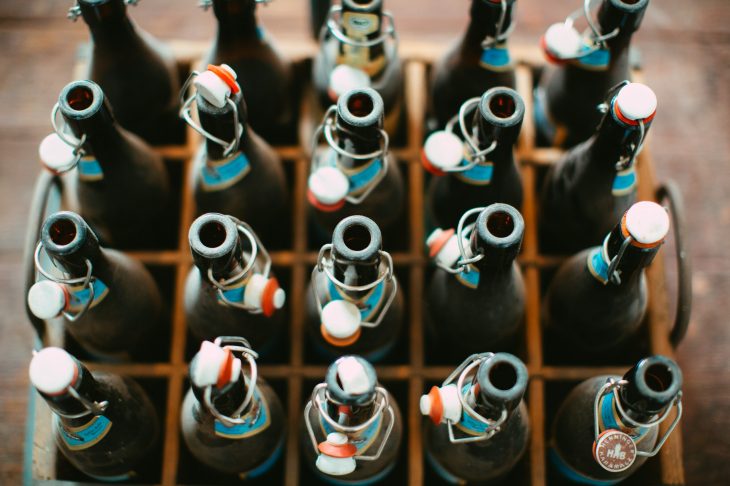
Which Beers Age Well
High-ABV beers are your best candidates for cellaring. Alcohol acts as a preservative, slowing oxidation and giving complex flavors time to develop. A good rule of thumb is to aim for a beer that has at least 8% ABV, since alcohol makes beer more resilient to potential staling flavors typically caused by oxidation. Beyond alcohol, acidity in sour beers and smoke phenols in rauchbiers can also make lower-ABV styles surprisingly cellar-worthy.
Barleywine
English barleywines are the classic long-haul cellaring choice. Their dense malt character transforms beautifully over time into toffee, dried fruit, and sherry-like richness.
- Robust malt backbone holds up for years
- Hoppiness fades, revealing complex dark fruit
- English styles outperform American for long aging
- Sweet, port-like qualities develop after 3–5 years
Imperial Stout
Commonly brewed with dark, roasted malts, imperial stouts yield dark chocolate, dried fruit, and even berry flavors over time. Bottle-conditioned versions develop the most nuance.
- Roasted edges soften into chocolate and vanilla
- Body becomes velvety and almost syrupy
- Bottle-conditioned versions evolve most dramatically
- Best opened between 2–7 years
Belgian Quadrupel
The pepper-like phenols in a fresh Quad will metamorphose into vanilla and leather, and fruitiness will evolve into dried fruit flavors — figs, dried cherries, stewed plums — resulting in an ultra-complex vintage beer.
- Harsh alcohol heat smooths out significantly
- Fruity esters transform into dried fruit complexity
- Spicy phenols develop into vanilla and leather
- Peaks around 3–5 years
Related: The Guide to Storing Beer
Beers That Should Not Be Aged
The vast majority of beers on the market are best enjoyed as fresh as possible. Hop-forward styles like the India Pale Ale are the clearest example. The flavors derived from myrcene, which gives beer that distinctive green hoppy flavor, and humulene, which brings spicy and herbal notes, are especially fleeting. As hop bitterness diminishes, beers are often left tasting overly sweet, lacking that necessary contrasting aspect. Stone Brewing’s Enjoy By IPA puts the expiration date right in the name — that’s not a gimmick, it’s a genuine warning. IPAs are best consumed within three months of their packaging date to enjoy their vibrant flavor and aroma.
The Pilsner suffers just as badly. Its appeal is entirely built on crispness, clarity, and that clean, refreshing snap. Beers that cannot age well, such as pilsners, are admired for their fresh, bright qualities, all of which will eventually be lost over a relatively short period of time. Oxidation tends to be rapid and somewhat violent, replacing malt flavors with unpleasant notes of black currant or tomato, followed by an impression of wet cardboard.
Wheat beers, session ales, and fruit-forward styles also fall into the drink-fresh camp. Once the bright, juicy fruit character fades, nothing is waiting underneath to compensate. If a beer’s identity is tied to its freshness, aging it will only strip away what made it worth drinking in the first place.
Ideal Temperature for Cellaring Beer
Temperature is the single most important variable in beer cellaring. Generally speaking, most beers should be stored between 50 and 55°F. Higher temperatures lead to a shortened lifespan, and anything much lower will cause a chill haze appearance.
Stability within that range matters just as much as hitting the right number. Being able to maintain a temperature in this range with little fluctuation will allow the beer to mature at an appropriate rate. If it’s too cold, the maturation period slows significantly, and if it’s too warm, it can speed things up and cause off-flavors. Daily swings between warm and cool accelerate oxidation and put stress on bottle seals.
Different styles have slightly different sweet spots. Darker and high-alcohol beers like barleywines and Russian imperial stouts age best at temperatures in the 50–60°F range, while sour and wild beers tend to do better in the 45–50°F range. Most homebrewers split the difference and target 50–55°F to cover the full spectrum of what they’re cellaring.
55°F has become a widely accepted temperature for aging most ales, with a good rule of thumb being to keep your cellar temperatures about 10°F below the temperature at which the beer was fermented. A basement corner, interior closet, or temperature-controlled wine fridge can all deliver this — the key is choosing a location that holds steady year-round without dramatic seasonal shifts.
Light and Oxygen Exposure
Light is one of the fastest ways to destroy a good beer. When UV rays hit isohumulone — the bittering compound extracted from hops during brewing — a chain reaction occurs. A photo-oxidation reaction takes place, creating the intensely flavor-active compound 3-methyl-2-butene-1-thiol (MBT), one of the most powerful flavor substances known to man. Commonly referred to as “skunky,” the pungent odor compound resembles the defense spray deployed by skunks. The alarming part is how fast this happens. Significant MBT formation can occur in under 30 seconds of direct sunlight on clear glass, and within minutes under fluorescent lighting.
Bottle color matters enormously. Clear and green glass offer little to no UV protection. Brown glass blocks significantly more harmful wavelengths. Aluminum cans block all light entirely, making them the strongest barrier against skunking.
Oxygen is the other major threat. Unlike light-strike, which is immediate, oxidation is a slow process that gradually degrades flavor compounds. In hop-forward beers, it produces papery, cardboard notes. In malt-forward cellar candidates, very slow, controlled oxidation is actually part of what builds desirable sherry-like and nutty complexity over time. The goal is to minimize oxygen exposure as much as possible through upright storage, intact seals, and dark conditions — letting only time, not air, do the work.
Storing Bottles vs Cans
The container your beer lives in directly affects how it ages. The right choice depends on the beer style, how long you’re cellaring, and what you’re hoping to achieve.
A Colorado State University study found that an amber ale aged better in bottles than in cans over six months, while an IPA aged the same in both. The results indicate that the effects of package type are dependent on beer style. There’s no single universal winner.
Key points to know:
- Aluminum cans block 100% of light and provide an airtight oxygen seal — ideal for fresh-forward styles
- Brown glass bottles age complex, malt-forward beers well and allow for bottle conditioning
- Bottle conditioning benefits beer aging because the yeast in the bottle is still alive and active, producing more complex flavors over time
- Clear and green glass offers minimal UV protection and are poor choice for any cellaring
- Force-carbonated canned beers lack the live-yeast activity that drives the best cellar evolution
- Cork-and-cage bottles allow subtle micro-oxygenation that supports development in traditional Belgian ales
For serious long-term cellaring of barleywines, imperial stouts, and Belgian strong ales, brown glass bottle-conditioned formats remain the preferred choice. Store them upright to keep yeast sediment settled at the bottom and prevent extended cork contact with the beer.
How Long to Age Beer
Patience is non-negotiable in the cellar. At a minimum, you don’t want to touch the beer you’re cellaring for a year. You won’t notice any significant changes in character to most cellar-friendly beers for the first 12 months. After that, how long you push it depends entirely on the style.
High-gravity beers like barleywines, imperial stouts, and old ales are ideal for a 5–10 year cellaring window. Sour beers and traditional lambics can go even further, with some enthusiasts cellaring gueuze for 15–20 years.
Goose Island Beer Company’s Bourbon County Brand Stout is one of the most documented examples of long-term aging in the American craft beer world. Reviewers who’ve opened decade-old bottles describe the evolution from boozy and intense into dark chocolate, plums, and silky vanilla. It’s a useful reference point for understanding just how much a big imperial stout can change over time.
For beers that can be aged, the average lifespan ranges from a couple of years to eight to ten years, and at five years, many beers begin to show signs of deterioration. Periodic tasting is the only reliable way to know where your beer sits in that window. Buy at least two bottles of anything you plan to cellar — one to open fresh as a baseline, one to age. That comparison is more informative than any general guideline. When a beer starts tasting thin, flat, or papery rather than rich and evolved, it’s past its peak. Trust what’s in the glass.
Building a Home Beer Cellar
A functional beer cellar doesn’t require major renovation or a big budget. Any cool, dark, stable space can work — the conditions matter far more than the setup.
Key requirements for your cellar space:
- Temperature held consistently between 50–55°F year-round
- No direct light exposure — use boxes, shelving in enclosed spaces, or a fridge with the light disabled
- Humidity between 50–70% to prevent corks from drying out or mold from forming
- Store all bottles upright to keep yeast settled and reduce oxygen contact
- Keep beer away from heat sources, washers, dryers, and anything that causes vibration
- Avoid exterior walls and areas with seasonal temperature swings
An underground basement is ideal — as long as the beer is not too close to a washer, dryer, or furnace. The ideal temperature is between 50 to 60°F for long-term storage.
If a basement isn’t available, a wine fridge repurposed for beer is one of the most practical alternatives. It maintains a steady temperature and blocks UV light. The one limitation is humidity — the same compressor that cools the fridge also strips out moisture, bringing the humidity too low for long-term storage of corked beers. For crown-capped bottles and cans, though, it works well. Whirlpool Corporation’s range of temperature-adjustable beverage coolers is a popular choice for this setup, offering reliable digital temperature control in a compact footprint.
Related: Barrel Aging Beer at Home
Tasting and Tracking Aged Beer
Evaluating aged beer is where all the patience and planning pay off — and doing it systematically tells you far more than cracking bottles at random.
The most effective approach is a vertical tasting: opening multiple vintages of the same beer side by side. It’s fun to taste several vintages in one sitting to watch how a particular beer ages over time and where your preferences lie. When tasting a vertical with a group, opinions may vary as to when a certain beer peaked and when it began falling off.
The Beer Judge Certification Program (BJCP) provides a structured framework for evaluating beer across aroma, appearance, flavor, mouthfeel, and overall impression. You don’t need to be a certified judge to apply that vocabulary usefully. When tasting a cellared beer, focus on: whether the body has thinned or remained full; whether malt flavors have moved toward toffee, dried fruit, or sherry; whether any cardboard or papery quality is creeping in; and whether alcohol heat has integrated or is still harsh.
Keep notes on everything — brands, types, the day it went in, the day it came out, and how everything tasted. A notebook, spreadsheet, or dedicated app like BEX all work. Over time, these notes build into a personal reference that helps you predict peak windows and avoid opening bottles too early or too late. Online communities like BeerAdvocate are also useful for comparing notes on specific vintages with other cellaring enthusiasts.
The Cellar Is Yours — Now Fill It Right
Not every beer deserves a spot in the cellar, but the ones that do will reward your patience in ways a fresh pour never could. Stick to high-ABV styles like Barleywines, Imperial Stouts, and Belgian Quads. Keep your temps steady between 50–55°F, block out light, and store everything upright.
You don’t need a fancy setup — a wine fridge or cool basement corner gets the job done. Buy two bottles of anything you plan to age, take notes, and taste as you go. Your palate is the best guide you’ve got. Get the conditions right, choose smart, and let time handle the rest.