
You’ve seen “sour mash” splashed across Jack Daniel’s bottles for years, but let’s be honest – you have no clue what it means. You’re not alone. Most whiskey drinkers assume it’s about taste, expecting some puckering, tart flavor that never comes. The confusion is real, and it’s costing you a deeper appreciation of your favorite bourbon. When you ask “what is sour mash,” the answer will shock you: it has absolutely nothing to do with how your whiskey tastes and everything to do with 200-year-old chemistry that makes bourbon consistently awesome. You’re about to discover the fascinating science behind America’s most famous whiskeys and why this misunderstood process creates every smooth sip.
Definition of Sour Mash
If you’ve ever wondered what “sour mash” means on a whiskey bottle, you’re not alone. The name’s got nothing to do with how your whiskey tastes. We’re talking about process here, not pucker-inducing flavors.
Sour mash is a process used by whisky distilleries that relies upon an older batch of mash to begin the fermentation process of the next batch. This technique involves taking a portion of the spent mash from a previous batch and incorporating it into the new mash of the subsequent batch. The process ensures consistency from one batch to another and helps control bacterial contamination during fermentation.
What Goes Into Sour Mash
Here’s where it gets interesting. The mash – a mixture of grain, malt, and water – is conditioned with some amount of spent mash (previously fermented mash that still contains dead yeast, a good food source for live yeast). This spent mash, also called backset, is what gives the process its “sour” name – it’s acidic with a pH around 5.0 to 5.4.
The grains involved aren’t exotic – we’re talking corn, rye, wheat, and malted barley. The acid introduced by the sour mash controls the growth of bacteria that could taint the Bourbon. The acidic environment prevents harmful microorganisms from taking hold while allowing beneficial yeast to thrive and ferment properly.
The Real Magic Behind the Name
The sour mash process works by using the acidic leftover material from previous fermentation. The name comes from the slightly acidic nature of that leftover mash, not from any sour taste in the final product. This acidic environment is crucial for maintaining proper pH levels during fermentation.
Most folks get confused thinking sour mash means tangy whiskey. That’s not the case. The sour mash, or fermented ingredients, gives the bourbon a sweeter and more robust flavor. It’s one of those interesting aspects of whiskey-making – something called “sour” actually helps create smoother, more consistent flavors.
Related: How to Build Your Own Mash Tun
History of the Sour Mash Process
The sour mash process traces back to the 1820s when Dr. James C. Crow, a Scottish chemist and physician, revolutionized American whiskey production. Born in Inverness, Scotland, and educated at Edinburgh University, Crow immigrated to the United States around 1814, eventually settling in Kentucky by 1820.
Dr. Crow introduced the sour mash process to ensure consistent quality whiskey. This technique involves reserving a portion of a batch’s spent mash to be added to the next, controlling pH levels and promoting beneficial yeast growth over harmful bacteria. Working at the Oscar Pepper Distillery in Kentucky from 1838, Crow brought scientific precision to whiskey-making using hydrometers and the newly invented Coffey still instead of traditional copper pot stills.
What Dr. Crow achieved was revolutionary – consistent whiskey quality from batch to batch. Before his innovations, distillers never knew what they’d get. Kentucky became the epicenter of sour mash production, with the process becoming integral to bourbon and Tennessee whiskey production. Old Crow was among the first bourbons to label bottles “sour mash,” establishing what’s now standard practice throughout the industry.
Sour Mash vs. Sweet Mash
The Road Less Traveled: Sweet Mash
Not every whiskey follows the sour mash playbook. The counterpart to the sour mash method is sometimes referred to as sweet mash. The sweet mash method simply means that no spent mash is added to the new mash. It’s like starting from scratch every single time – fresh yeast, fresh everything.
The sweet mash process is every bit as traditional as the sour mash one, but because of the higher possibility of bacterial contamination — particularly in the 19th century, when sour mashing became popular — and the lack of flavor continuity, it has become less common in American whiskey making.
Risk vs. Reward
Here’s the thing about sweet mash – it’s riskier but potentially more rewarding. While sour mash whiskeys, like many bourbons, are renowned for their consistent taste, sweet mash whiskeys may exhibit a broader range of flavors. You’re rolling the dice each time, which can lead to spectacular results or spectacular failures.
Sweet mash isn’t as common due to the precise and careful control required to prevent unwanted bacterial contamination, which is naturally mitigated in the sour mash process. It’s like the difference between using a proven recipe and experimenting every time you cook dinner.
Modern Examples
However, there are still some whiskey makers who use this process. For example, Wilderness Trail Distillery in Kentucky makes its bourbon and rye whiskeys in this manner. These distilleries are keeping the sweet mash tradition alive, offering whiskey drinkers something genuinely different in a world where consistency often trumps experimentation.
The choice between sour and sweet mash often comes down to philosophy – do you want the reliability of proven methods, or are you willing to chase the potential magic that comes with starting fresh each time?
Related: Decoction Mash: Your Pro Guide
Flavor Impact of Sour Mash
Busting the Biggest Myth
Let’s clear the air right off the bat: sour mash whiskey is a type of whiskey made using a method that incorporates a portion of a previously fermented mash into a new batch… Although the name suggests a sour flavor, it refers to the process rather than the taste of the whiskey. If you’re expecting your Jack Daniel’s to taste like a pickle, you’re barking up the wrong tree.
The reality is much more subtle and sophisticated. The sour mash, or fermented ingredients, gives the bourbon a sweeter and more robust flavor. It’s counterintuitive, but that acidic backset helps create smoother, more mellow whiskeys.
The Real Flavor Benefits
Here’s where the science gets delicious. This technique, similar to making sourdough bread, helps maintain consistent acidity levels in the mash, ensuring a stable and efficient fermentation process. What you get in your glass is the result of more controlled fermentation, which typically means cleaner flavors and fewer off-notes.
By using an established and known fermented “sour”, this fermentation process controls the introduction and growth of foreign bacteria and yeasts that could damage the Bourbon and improves the consistency and quality of the liquor, ensuring every bottle tastes as similar as possible. Think of it as quality control that happens at the molecular level.
Consistency Over Chaos
The biggest flavor impact of sour mash isn’t necessarily what it adds – it’s what it prevents. Without the pH control and bacterial management that comes with sour mash, you’d get wild variations in flavor from batch to batch. Some might be incredible, others might be undrinkable.
Sour mash is widely used in the production of American whiskeys, like bourbon and Tennessee whiskey, to achieve consistent quality and flavor across batches. That bottle of bourbon you love? The sour mash process is a big reason why the next bottle will taste just as good.
The flavor profile you experience – those notes of vanilla, caramel, and spice – comes from the grains, the fermentation, and the aging process working in harmony. Sour mash is the conductor making sure the orchestra stays in tune.
Famous Sour Mash Whiskeys
Jack Daniel’s: The Sour Mash King
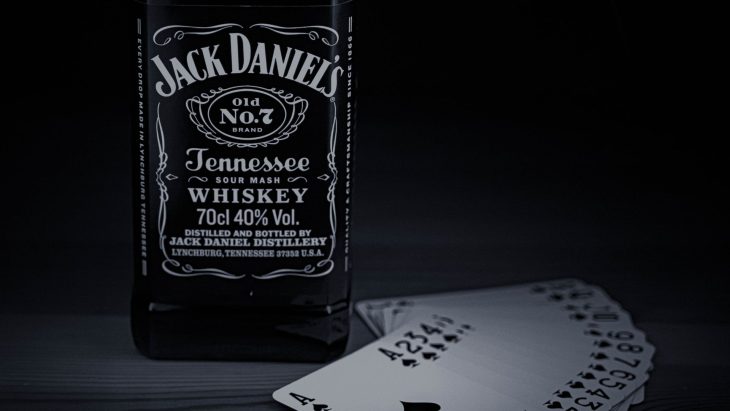
When most people think of sour mash, they think of Jack Daniel’s famously labels its Old No. 7 bottles as “Tennessee Sour Mash Whiskey,” and that description is accurate. They’ve been proudly putting those words on their square bottles for over a century, and there’s good reason for it.
The mash for Jack Daniel’s is composed of 80% corn, 12% rye, and 8% malted barley, and is distilled in copper stills. But what makes Jack special isn’t just the sour mash – it’s their Lincoln County Process, where it is then filtered through 10-foot (3 m) stacks of sugar maple charcoal. This extra step, combined with sour mash, creates that smooth Tennessee character.
The Bourbon Legends
Jim Beam, Jack Daniel’s, Wild Turkey, Maker’s Mark, and Woodford Reserve are just five of a myriad of Bourbon and Tennessee whiskey distilleries where sour mash is the production method of choice. These aren’t just random brands – they’re the heavy hitters that built American whiskey’s reputation worldwide.
Well-known brands of sour mash whiskey are Jim Beam and Jack Daniel’s, but here’s the kicker: virtually all major bourbon and Tennessee whiskey distillers use the sour mash technique, even though only a portion of them actively market their whiskeys as “sour mash.”
The Original: Old Crow
Let’s give credit where it’s due. Old Crow Bourbon takes its name from Dr. James C. Crow, a pioneer in the field of science who refined the whiskey-making process. He was one of the first bourbon distillers to put ‘Sour Mash’ on the label, which has since become standard practice.
James C. Crow, a Scottish immigrant, started distilling what would become Old Crow in Frankfort, Kentucky, in the 1830s. While today’s Old Crow might not have the same reputation as its ancestor, the original recipe was famously favored by Civil War general and President Ulysses S. Grant, as well as President Andrew Jackson and American writer Mark Twain.
Beyond the Big Names
Nelson’s Green Brier represents the modern revival of historic Tennessee whiskey, bringing back recipes from before Prohibition. This was the first bourbon the Nelson brothers made after they discovered their family’s old distillery in Tennessee (which had been shuttered during Prohibition).
The beautiful thing about sour mash is that it’s not exclusive to the big players. Small craft distilleries across America use this time-tested process to create consistent, quality whiskeys that compete with the established brands.
Common Myths About Sour Mash
Myth #1: Sour Means Sour Taste
This is the granddaddy of all sour mash misconceptions. Despite its iconic status and unique flavor, many are surprised to learn that Jack Daniel’s owes its smooth character to the traditional sour mash process. People hear “sour” and think puckering, tart flavors. Wrong!
Ever since doing shot after shot after shot of Jack in college, I’ve always wondered what “sour mash” meant. It sure didn’t taste sour. You’re not alone in that confusion. The “sour” refers to the acidic pH of the backset, not the flavor profile of your finished whiskey.
Myth #2: It’s Some Secret Jack Daniel’s Formula
As it happens, with a lot of marketing, sour mash is not unique to Jack Daniel’s. Nearly all bourbon is produced this way. Jack just happens to put it prominently on their label, making folks think they invented something special. They didn’t – they’re just honest about their process.
As of 2005, all straight bourbon is produced using the sour mash process. So when you’re sipping that craft bourbon that doesn’t mention it anywhere on the bottle, guess what? They’re probably using it too.
Myth #3: Sour Mash Means Lower Quality
This one’s backwards. By using an established and known fermented “sour”, this fermentation process controls the introduction and growth of foreign bacteria and yeasts that could damage the Bourbon and improves the consistency and quality of the liquor. Sour mash is a quality control measure.
Dr. Crow is credited with being the inventor of the sour mash process — adding acidic, nutrient-rich spent mash or backset to the mash bill used to produce a bourbon, which prevents the spirit from becoming too basic, thus preventing any unwanted bacteria from forming in the whiskey. It’s science making whiskey better, not cheaper.
Myth #4: All Whiskey Uses Sour Mash
While it’s true that most American whiskeys use sour mash, it’s not universal. Finding American whiskies that explicitly do not use this process can be a bit challenging, as this technique is prevalent in the production of many American whiskies, but they exist.
American single malt whiskies, inspired by Scottish tradition, focus more on the malted barley and distillation process rather than fermentation techniques like sour mash. Some craft distilleries deliberately avoid it to create different flavor profiles, proving there’s more than one way to make great whiskey.
Myth #5: Sour Mash Is Modern Innovation
Here’s one that trips up whiskey history buffs. Some people think it is a recent development, perhaps something that emerged with industrial distilling. Nope! Dr. James C. Crow was perfecting this process back in the 1830s, making it nearly 200 years old.
The truth is, sour mash has been the backbone of American whiskey for generations. What’s modern is our understanding of why it works so well – the science behind pH control and bacterial management. But the practice itself? That’s as traditional as it gets in American whiskey-making.
Sour Mash: Not What You Think
Here’s the deal – “sour mash” has nothing to do with sour taste. It’s genius chemistry from the 1830s that makes your bourbon taste consistently awesome every single time. Dr. Crow figured out that using acidic leftover mash creates the perfect environment for good yeast while killing off nasty bacteria. That’s why Jack Daniel’s, Jim Beam, and pretty much every bourbon you love tastes the same bottle after bottle.
The crazy part? Something called “sour” actually makes whiskey smoother and sweeter. Now you know the secret behind America’s best whiskeys – it’s 200-year-old quality control that just works.
FAQs
Sour mash is made from a mixture of grains (typically corn, rye, wheat, and malted barley), water, and the key ingredient – backset or spent mash from a previous fermentation batch. This leftover mash contains dead yeast and has an acidic pH of around 5.0-5.4, which gives the process its “sour” name. It’s a recycled fermented grain mixture that helps start the next batch.
Jack Daniel’s is called so because they use the traditional sour mash fermentation process, where acidic spent mash from previous batches is added to new grain mixtures. They prominently display “Tennessee Sour Mash Whiskey” on their labels, making them one of the most recognizable sour mash brands. However, Jack didn’t invent this process – they just openly advertise using this centuries-old technique that most bourbon distilleries employ.
Sour mash whiskey offers superior consistency and quality control. The acidic environment prevents harmful bacteria from growing while promoting beneficial yeast activity, ensuring each batch tastes similar to the last. This process creates smoother, more robust flavors and eliminates the wild taste variations you’d get starting fresh every time. It’s essentially quality control at the molecular level, delivering reliable flavor profiles bottle after bottle.
No, not all whiskey uses sour mash, though most American whiskeys do. As of 2005, all straight bourbon is produced using sour mash, but American single malt whiskeys often follow Scottish traditions without this process. Some craft distilleries deliberately avoid it to create different flavor profiles. Sweet mash (starting fresh each time) is riskier but still used by distilleries like Wilderness Trail for unique results.