
Every brewer wants consistency—hitting target gravities, achieving proper attenuation, and nailing that perfect runoff every time. The secret’s right there on your malt specifications sheet. Most brewers glance at color and move on, but moisture content, extract potential, diastatic power, protein levels, and beta-glucans tell the real story. These numbers predict your brewhouse performance, explain efficiency variations, and help you select the right malt for any recipe. Understanding malt specifications transforms brewing from guesswork into precision. Whether you’re filling a carboy or running a commercial operation, knowing how to read these technical sheets gives you control over your process and delivers better beer.
What Are Malt Specifications?
A malt specification sheet is your grain’s technical datasheet, packed with details that tell you exactly what you’re working with before you crack open a sack. These technical sheets from maltsters reveal the characteristics and quality of malt, helping brewers select between different malts and adjust recipes or processes accordingly.
Every batch of malt varies slightly, even from the same maltster. Small variations in color, moisture, and extract content can seriously impact your recipe’s results. That’s where malt specs become essential for quality control, letting you know if that delivery of Pilsner malt will perform as expected in your brewhouse.
Most homebrewers can get by without obsessing over every number on a malt analysis sheet, but understanding the basics helps troubleshoot when something goes sideways. Did your efficiency tank? Check the extract potential. Is your mash taking forever to lauter? The beta-glucan content might tell the story. Professional brewers rely heavily on these numbers since consistency is everything when making the same beer repeatedly.
Maltsters provide these spec sheets for virtually every product, either as average analyses or on a lot-by-lot basis through certificates of analysis. The sheet lists various malt parameters determined using standardized lab testing procedures.
Related: Choosing the Best Base Malts For Your Beer
Key Physical Specs: Moisture, Color (°L/EBC), Test Weight
Moisture content affects the freshness and quality of your malt. Most base malts should measure around 4-5% moisture. Higher moisture risks storage problems like mold growth or premature staling, while lower moisture means longer shelf life and better freshness.
Moisture directly impacts brewhouse calculations. A one percent increase in moisture content, along with a corresponding decrease in extract potential, can lower your original gravity by more than one point. If you’re brewing commercially and targeting consistency, that’s significant. Excess moisture also means you’re paying for water weight instead of fermentable material.
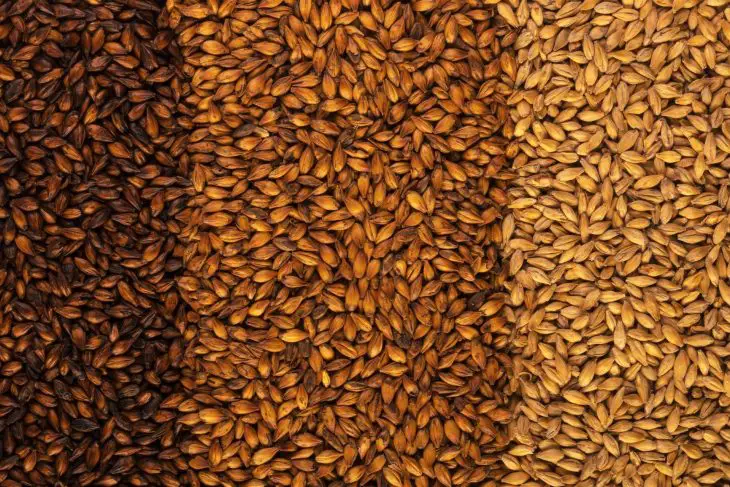
Color’s measured in degrees Lovibond (°L) in the US or EBC units in Europe. One degree Lovibond roughly corresponds to 2.65 EBC, with lower values indicating lighter malt and higher values meaning darker malt. A standard Pilsner malt might be 1.5-2°L, while Munich could be 10°L, and roasted malts can exceed 300°L.
Among different lots from the same maltster, the color of black roasted malt can vary by 40 degrees Lovibond. That variability matters when targeting a specific beer color.
Test weight (measured in kilograms per hectoliter or pounds per bushel) indicates kernel plumpness and density. The plumper the kernel, the better the quality. High test weight suggests well-developed, uniform kernels that’ll perform consistently in your mash. Most quality two-row malts have test weights in the 65-70 kg/hl range.
Extract & Yield (Dry and Fine Grind)
Extract potential answers to the question: how much sugar can I get from this malt? It’s typically expressed as specific gravity achievable with one pound of malt mashed in one gallon of water. On spec sheets, you’ll see it listed as percentages—dry basis fine grind (DBFG) and dry basis coarse grind (DBCG).
Fine grind extract (DBFG) represents the maximum extract possible under ideal lab conditions, typically running around 80-82% for quality-based malts. It measures the quality of the grain itself. Coarse grind extract (DBCG) uses a crush closer to what you’d achieve in a real brewhouse, making it the more practical number for predicting actual yield.
You can calculate extract potential using the formula: Extract potential (S.G.) = 1 + (DBFG / 100) × 0.04621. For example, a malt with 80.5% DBFG would give you an extract potential of 1.0372. That’s the theoretical maximum—in practice, your brewhouse efficiency will reduce that by 10-20% depending on your equipment and process.
The difference between fine and coarse grind (FG/CG difference) reveals malt modification levels. This value indicates the modification of the malt and its suitability for single infusion mashing. A smaller difference (1-2%) suggests well-modified malt that’ll work great with simple single-step mashes. A larger difference means you might need a more complex mash schedule to achieve full conversion.
Diastatic Power & Enzymatic Activity
Diastatic power refers to the enzymatic power of malt—its ability to break down starches into fermentable sugars during mashing, measured in degrees Lintner (°L) in the US or Windisch-Kolbach units (°WK) in Europe. The key enzymes are alpha-amylase and beta-amylase, which break starch molecules into sugars your yeast can ferment.
A malt needs approximately 35°L to be considered “self-converting.” Most American two-row base malts measure around 120-140°L, while six-row can reach 160°L or higher. Specialty malts like caramel and chocolate have zero diastatic power since they’ve been roasted or kilned until their enzymes are destroyed.
If you’re loading up your grain bill with specialty malts, you need sufficient base malt to provide the enzymatic power for conversion. Calculate the weighted average diastatic power of your grain bill—if it’s above 30°L, you should be good for conversion. Anything lower risks ending up with a sweet, under-attenuated beer.
High-DP malts like American six-row are ideal when using lots of adjuncts (corn, rice, unmalted grains) that need enzymatic assistance. Low-DP malts like some continental European varieties work fine for all-malt grists but might struggle with high percentages of unmalted adjuncts. Check your numbers before brew day to avoid conversion problems hours into your mash.
Protein, FAN, and Soluble Nitrogen
Protein values are measured interchangeably with nitrogen values, where each 1% of nitrogen equals 6.25% of protein. Most base malts range from 10-12% protein. For all-malt beers, protein values exceeding 12% may indicate potential haze or mash runoff problems.
European malts tend to run lower in protein (9-10%), which is why they’re prized for clean lagers—less protein means less chill haze risk. American malts often run higher (11-12%), which isn’t necessarily problematic. When adjuncts are used, malts with more than 10% protein are required to achieve acceptable head, body, and yeast nutrition.
Free amino nitrogen (FAN) measures the nitrogen available for yeast nutrition. Too little FAN can lead to fermentation issues like under-attenuation and sulfur off-flavor production, while too much can lead to haze and diacetyl production, possibly causing shelf-life issues. The target is usually above 150 mg/L in your wort.
FAN is essential for yeast health—without it, they can’t build the cellular machinery needed for healthy fermentation. The soluble protein to total protein ratio (Kolbach index) provides another perspective on modification. The ratio should be 38-45% for good results—too low and you get poor head retention, too high and you risk clarity problems.
Related: Crystal Malt vs Caramel Malt: Key Differences Explained
Beta-Glucans, Viscosity & Lautering Performance
Beta-glucan polymers from barley endosperm cell walls affect brewhouse extract yield, wort and beer viscosities, plus lautering and filtration. These molecules can significantly slow your runoff if they’re not properly broken down during malting.
High beta-glucan levels have long been associated with lautering difficulties due to their effect on mash viscosity, with typical Congress Mash wort viscosities from base malt running 1.45-1.60 centipoise (CPS). Viscosity above 1.60 CPS might indicate a slow, frustrating runoff. Beta-glucan should be under 180 mg/L for trouble-free runoff.
Well-modified malt naturally has lower beta-glucan levels because enzymes had time to degrade them during malting. If you’re working with high-beta-glucan malt, a beta-glucan rest at 95-113°F (35-45°C) during your mash can help. At around 111°F, beta-glucanase enzymes work to degrade both beta-glucans and pentosans.
Commercial enzyme additions like glucanase can resolve issues with problematic malt or when using high percentages of wheat or oats. Check your spec sheet before ordering, and if that beta-glucan number looks high, either adjust your mash schedule or source different malt.
Microbiology & Storage: Microbial Limits and Oxidation
Malt isn’t sterile, but it shouldn’t harbor excessive microorganisms. Spec sheets list microbial counts—total plate count, mold count, and sometimes specific tests for pathogens. These limits ensure your malt won’t introduce infections or produce off-flavors in your beer.
Mold is the primary storage concern. High moisture combined with warm temperatures creates ideal conditions for mold growth. Some molds produce mycotoxins, which are definitely unwanted in your beer. That’s why proper storage is crucial. Keep your malt cool (ideally below 60°F), dry (maintaining that 4-5% moisture target), and away from pests.
Fresh malt tastes different than old malt. Moisture can affect freshness and quality. Over time, oxidation degrades enzymes, creates stale flavors, and reduces extract potential. Most maltsters include a “best by” date—usually 6-12 months from production for base malts, potentially longer for heavily roasted malts that are more stable.
Oxygen pickup during storage accelerates staling. Those fresh-bread aromas from Pilsner malt will fade to cardboard notes if the malt sits in poor conditions too long. Buy what you need, rotate your stock, and trust your nose—stale malt smells like stale cereal, not potential beer.
Specialty Malts: Kilning Specs and Flavor Markers
The duration and temperature of malting steps like kilning, stewing, and roasting affect the technical characteristics, flavor, and color of different malts. Munich malt gets kilned longer and at higher temperatures than Pilsner, developing rich, toasty flavors through Maillard reactions where sugars and amino acids create hundreds of flavor compounds.
Caramel malts are different. They’re stewed while still wet, which gelatinizes their starch and converts it to sugars inside the kernel. Then they’re kilned, caramelizing those sugars and creating characteristic sweet, toffee-like flavors. The darker you go (Crystal 40 vs. Crystal 120), the more you’re pushing toward burnt sugar and raisin notes.
Color is your primary flavor indicator for specialty malts—more color generally means more intense flavor, though the relationship isn’t perfectly linear. A 300°L chocolate malt delivers sharp, bitter chocolate notes, while a 500°L roasted barley brings acrid, coffee-like roastiness.
Extract potential drops as the color increases since roasting destroys some fermentable material. You’re not using specialty malts for their extract anyway—you’re using them for flavor, color, and body. Just remember, they won’t contribute diastatic power, so your base malt needs to carry the enzymatic load.
How to Read & Use a Malt Spec Sheet (Practical Examples)
When that certificate of analysis (COA) arrives, run through these key numbers first:
- Moisture: Should be around 4-5%
- Extract DBFG: Looking for 79-82% on base malts
- Color: Does it match what you ordered?
- Diastatic Power: Is it sufficient for your grain bill?
These product information sheets enable us to make informed decisions about the grains we use, ensuring quality and consistency.
Each spec sheet includes a lot number—critical for traceability. If you have an issue with a particular batch, that lot number lets you track down when it was made and whether other brewers had similar problems.
For recipe calculations, if you normally use Malt A with 81% DBFG but receive Malt B with 79% DBFG, you’ll need to adjust. Brewhouse extract yield can be calculated to determine the actual expected yield. If your typical brewhouse efficiency is 75%, you’d expect slightly lower yield with the new malt—you’ll need roughly 2-3% more grain to hit the same gravity.
Color calculations work similarly. If you’re swapping one Munich malt (8°L) for another (10°L), use brewing calculators to predict the impact on your final beer color. Check, calculate, adjust—that’s how you maintain consistency.
Master Your Malt Specs for Better Beer
Understanding malt specifications transforms you from a guessing brewer to an informed decision-maker. These technical sheets aren’t just paperwork—they’re your roadmap to consistency and quality control in the brewhouse. The physical specs (moisture, color, test weight) tell you what you’re getting, while extract values predict your brewhouse yield. Diastatic power ensures you’ve got enough enzymatic muscle to convert your mash, especially when working with specialty malts or adjuncts. Protein and FAN numbers guide you toward proper head retention while avoiding haze issues. Beta-glucan levels warn you about potential lautering nightmares before they happen. Armed with this knowledge, you can read any spec sheet, calculate recipe impacts, troubleshoot problems, and consistently brew better beer—whether you’re filling a carboy in your garage or running a commercial operation.
FAQs
Malt properties include moisture content (typically 4-5%), color measured in degrees Lovibond or EBC, extract potential (how much sugar it yields), diastatic power (enzymatic strength for starch conversion), protein content (affecting head retention and clarity), beta-glucan levels (impacting lautering), and test weight (kernel density). These properties, detailed on malt specifications sheets, determine how malt performs in the brewhouse and influence your beer’s final characteristics.
100% malt means the beer’s fermentable sugars come entirely from malted grains—typically barley, wheat, or rye—with no adjuncts like corn, rice, or sugar added. This designation indicates an all-malt grain bill, which many brewers prefer for fuller body, better head retention, and more complex malt character. German Reinheitsgebot (purity law) beers are classic examples of 100% malt brewing, though the term doesn’t specify which types of malt were used.