
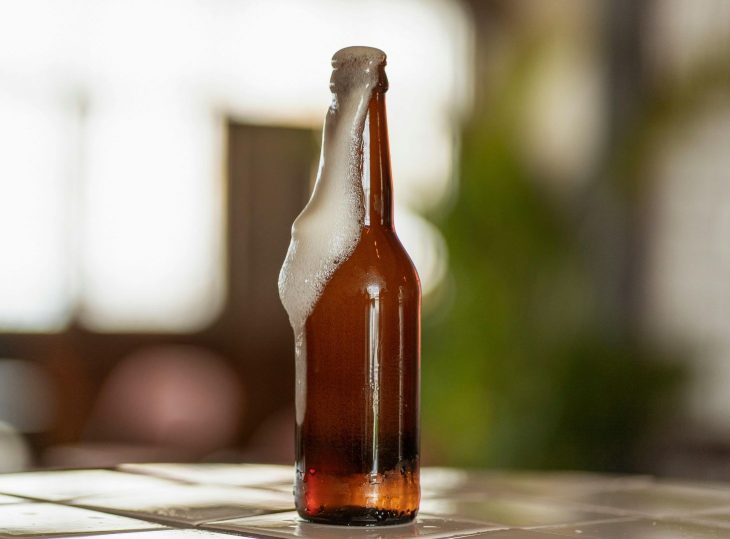
Beer gushing causes range from microscopic fungi to overzealous carbonation, and understanding them helps brewers maintain quality while consumers avoid disappointment. Beer gushing happens when carbon dioxide uncontrollably escapes from a bottle or can upon opening, often turning the entire contents into foam. Think of it as your beer having a volcanic eruption the moment you crack the seal. For brewers, gushing represents a serious quality control issue. For consumers, it means wasted beer and a disappointing drinking experience. The causes are surprisingly complex, involving everything from wild yeast to pressure buildup to chemical compounds that create perfect conditions for foam explosions.
Physical Causes
Excessive carbonation is one of the primary causes of beer gushing, with carbon dioxide levels determined by brewing practices and beer type. When there’s more CO₂ dissolved in your beer than it can comfortably hold, opening that bottle releases the pressure spectacularly.
Over-carbonation typically stems from adding too much priming sugar, continuing fermentation at high temperatures, or sealing bottles too early. Homebrewers know this pain well—those priming sugar calculations aren’t always precise, and the results can be explosive. In bottles and kegs, pressure can build to dangerous levels. Extreme gushing and even exploding bottles can result from excessive carbon dioxide buildup.
Mechanical agitation during transport or storage creates longer-lasting problems. When beer gets jostled around, it disturbs the CO₂ that’s peacefully dissolved in the liquid, encouraging it to form bubbles. Those bubbles become nucleation sites—basically, tiny gathering points where even more CO₂ rushes to join the party. Mechanical agitation during transport creates nucleation sites where gas bubbles form and rapidly expand. The problem compounds itself because once you’ve got bubbles forming, they create surfaces where additional carbon dioxide can escape from solution. It’s like a chain reaction, and by the time you pop that cap, your beer’s ready to make a break for freedom.
Related: Why Does My Beer Taste Like Metal?
Biological Causes
Wild yeast and bacteria are invisible troublemakers that can turn perfectly good beer into gushing nightmares. Diastatic yeast strains, including certain Saccharomyces cerevisiae varieties, can continue fermenting long after packaging, producing unwanted carbon dioxide and alcohol. What makes these strains particularly troublesome is their ability to break down complex sugars that regular brewing yeast can’t touch.
These wild yeasts secrete an enzyme called glucoamylase outside the cell, which breaks down dextrins into fermentable glucose, leading to secondary fermentation in sealed containers. It’s like having uninvited guests at a party who keep raiding the fridge long after everyone else has gone to bed. Brettanomyces deserves special mention here—wild yeasts like Brettanomyces can ferment residual sugars, generating additional CO₂ and sometimes other compounds that promote gushing. While Brett has its place in certain beer styles, it’s a disaster when it shows up uninvited.
Bacteria can be just as problematic. Lactic acid bacteria can produce carbon dioxide as they ferment sugars, causing increased pressure in bottles. Lactobacillus and other lactic acid bacteria don’t just produce off-flavors—they’re CO₂ factories. These microbes typically sneak in through contaminated equipment or ingredients, multiplying during fermentation or even after packaging, creating a perfect storm of pressure buildup.
Chemical Causes
Primary gushing in beer is mostly caused by hydrophobin proteins secreted by filamentous fungi, which interact with CO₂ molecules during carbonation to form nanobubbles. These proteins come from fungi like Fusarium that can infect barley and wheat in the field, especially during damp conditions before harvest. Hydrophobins create microscopic nucleation sites—tiny spots where CO₂ gathers and forms bubbles. These proteins act like nucleation sites for carbon dioxide release, much like oxalate crystals.
Surfactants and certain proteins affect foam stability in complex ways. Beta-glucans are polysaccharides that come from grain cell walls, particularly abundant in wheat and barley. While they can contribute to beer body and mouthfeel in small amounts, excessive beta-glucans can create foam stability issues. They interact with proteins and other compounds in ways that can either stabilize or destabilize foam, depending on concentration and conditions.
Malt contains oxalates that survive into finished beer and precipitate as crystals, which act as nucleation sites for carbon dioxide release. Picture tiny jagged crystals suspended in your beer—each one is a potential launching pad for CO₂ bubbles. These crystals form slowly, sometimes taking weeks to appear in unstable beers. Oxalate is normally precipitated with calcium during wort boiling, and removal is achieved through vigorous boiling in the presence of sufficient calcium.

Beer Style Influence
Beer style significantly impacts foam behavior, and understanding these differences helps set proper expectations. Wheat beers are notorious foam producers—wheat malts and flaked barley increase head retention due to their high protein content. German hefeweizens and Belgian witbiers are typically carbonated to higher levels than most other styles, sometimes reaching 4 volumes of CO₂ or more, creating characteristic fluffy, meringue-like heads. The challenge is that the same high protein content and elevated carbonation make wheat beers more prone to gushing when something goes wrong.
Lagers take a different approach. Lagers feature good carbonation levels with less protein content compared to wheat beers, resulting in controlled foam formation. The cold fermentation and extended lagering period help proteins and other haze-forming compounds settle out, reducing potential nucleation sites. That clean, crisp character comes with benefits for gushing prevention—with fewer suspended particles and proteins, there are simply fewer spots where unwanted foam can start.
Stouts, particularly Irish dry stouts, often use nitrogen service. Beers like Guinness served with nitrogen and carbon dioxide mixtures have very thick, creamy heads that last longer due to nitrogen’s unique properties. Nitrogen creates extremely fine bubbles that are structurally more stable. The high viscosity of stouts from roasted malts and often oats helps control foam, creating that smooth, cascading effect rather than explosive gushing.
Packaging Factors
Packaging presents numerous opportunities for problems. Low headspace pressure in bottles during filling can cause gushing, often occurring when regulators are set too low or gas is released too quickly. Professional breweries manage this through precise counter-pressure bottling systems, but homebrewers working with simpler equipment face more challenges.
Calculating priming sugar isn’t exact, and sometimes it takes several attempts to perfect carbonation levels for specific styles. The temperature of beer at bottling also matters—warmer beer holds less dissolved CO₂, affecting how much additional carbonation develops. Oxygen, bacteria, or wild yeasts introduced during kegging can lead to off-flavors and gushing.
Key Packaging Considerations:
- Proper headspace pressure during bottling prevents foam eruptions
- Accurate priming sugar measurements prevent over-carbonation
- Beer temperature affects dissolved CO₂ levels
- Cap integrity maintains a proper seal and pressure
- Sanitation of all equipment prevents microbial contamination
- Counter-pressure filling systems provide better control
Related: What Happens When You Drink Expired Beer?
Environmental & Handling Factors
External conditions play a bigger role than most people realize. Temperature variations in storage coolers can affect carbonation levels, with warmer temperatures reducing CO₂ solubility and increasing pressure. When beer warms up, some dissolved CO₂ comes out of solution. When it cools again, that gas doesn’t automatically re-dissolve—instead, it can create pockets of pressure or microscopic bubbles. Repeated temperature cycling is particularly problematic.
Transportation agitation is real. Mechanical agitation during transport creates nucleation sites where gas bubbles form and rapidly expand. Constant vibration in delivery trucks, rough handling during unloading, or even just the bumpy ride home can disturb the delicate balance of dissolved CO₂. Professional breweries factor this into their packaging decisions, often using slightly lower carbonation targets for distribution beer.
Critical Environmental Factors:
- Stable cold storage prevents CO₂ from coming out of solution
- Temperature cycling creates pressure pockets and bubbles
- Vibration during transport disturbs dissolved gases
- Proper handling reduces mechanical agitation
- Cold chain maintenance throughout distribution
How Brewers Prevent Gushing
Membrane filtration using a 0.1 µm pore size helps reduce gushing potential by removing particles and potential nucleation sites. This physical removal of yeast cells, protein particles, and other suspended solids reduces spots where CO₂ can gather. Fining agents like isinglass, gelatin, PVPP, or Sparkolloid bind with proteins and polyphenols, causing them to settle out and creating clearer beer.
Pasteurized beer protects against lactobacillus, pediococcus, wild yeast, and packaging instability caused by re-fermentation, reducing gushing and exploding can risks. Beer pasteurization at 60°C reduces gushing potential while extending shelf life. The process requires careful control to balance microbial elimination with flavor preservation.
Hop oil extracts can suppress gushing when added before carbonation, with better effectiveness when added to wort after cooling and before fermentation. Managing proteins through mash temperature control and enzyme additions prevents problems from the start. Ensuring uninfected barley and malt through strict quality control prevents fungal protein contamination that causes primary gushing. For homebrewers, buying from reputable suppliers and careful sanitation throughout the process make the biggest difference.
Keep Your Beer In The Glass, Not On The Floor
Beer gushing causes a boil down to pressure, nucleation sites, and microbial activity working together to create foam explosions. Over-carbonation provides the force, while wild yeast, fungal proteins, and rough handling supply the triggers. For brewers, layered defenses work best: quality ingredients, proper fermentation control, sanitation, precise carbonation, and careful packaging. Homebrewers should measure priming sugar carefully and maintain rigorous sanitation. Beer lovers can help by storing bottles cold and stable while avoiding temperature swings and rough handling. With attention to detail, gushing is totally preventable—keeping more beer where it belongs.
FAQs – Why Beer Gushes
Beer gushing happens when carbon dioxide uncontrollably escapes from bottles, caused by excessive carbonation, wild yeast contamination, or fungal proteins. Hydrophobin proteins from Fusarium fungi create nucleation sites where CO₂ gathers and explodes into foam. Other causes include over-priming with sugar, diastatic yeast strains fermenting after packaging, rough handling during transport, and temperature fluctuations that disturb dissolved gases.
Prevent gushing through pasteurization at 60°C, membrane filtration, and strict raw material quality control to eliminate fungal proteins. Use accurate priming sugar measurements, maintain rigorous sanitation to prevent wild yeast contamination, and ensure complete fermentation before packaging. Store beer at stable cold temperatures, handle bottles gently, and avoid temperature swings. Fining agents like gelatin or isinglass help remove proteins that create nucleation sites.